How Modern CRM Software Is Driving Sales Automation and Business Growth in India
India’s business landscape is transforming rapidly. Rising competition, digitally aware customers, and growing operational complexity demand smarter systems to manage sales, marketing, and customer relationships. Traditional spreadsheets, manual follow-ups, and disconnected tools no longer work.
This is where modern CRM software India is changing the game.
From startups and SMEs to large enterprises, Indian companies are now adopting sales automation tools and business CRM solutions to streamline operations, improve conversions, and accelerate business growth.
What Is CRM and Why It Matters Today?
CRM stands for customer relationship management. In simple terms, CRM software helps businesses:
- Manage leads
- Track customer interactions
- Automate sales workflows
- Improve customer engagement
- Increase revenue
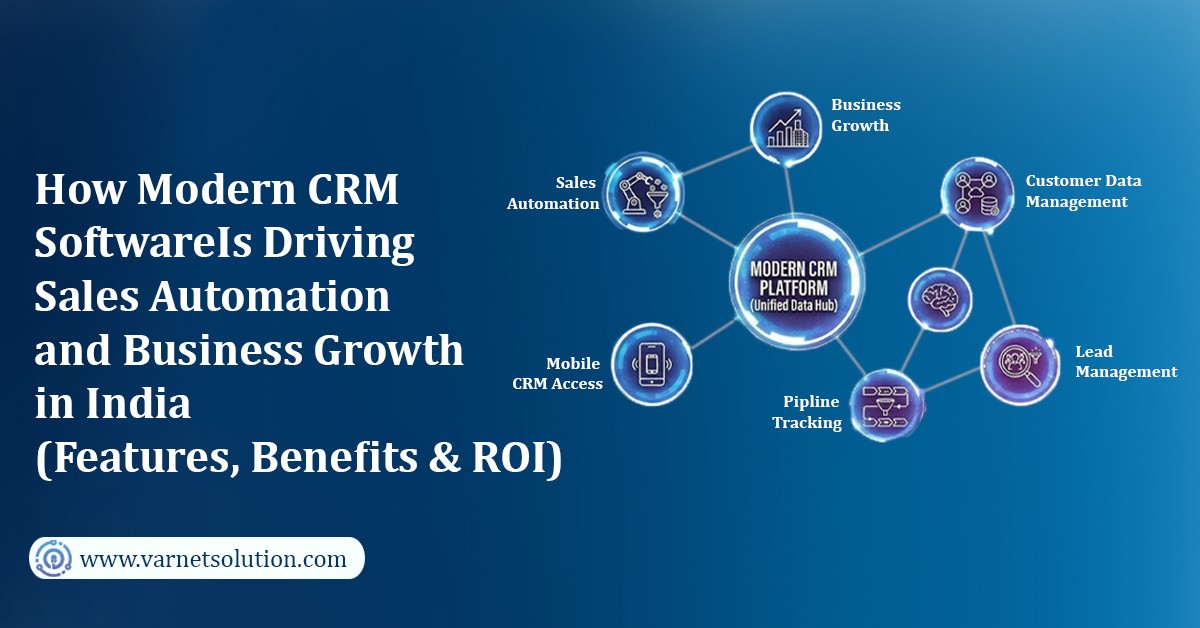
Modern CRM is no longer just a contact database. It is a powerful business growth engine that connects sales, marketing, customer support, and operations into one unified platform.
According to the NASSCOM Digital Transformation Report 2025, Indian businesses using CRM systems report:
- 41% higher sales productivity
- 32% improvement in customer retention
- 27% faster revenue growth
Why CRM Adoption Is Exploding in India
- Growing Competition
With more startups and digital businesses entering every sector, companies must respond faster and sell smarter.
- Digital Customer Behavior
Customers now expect:
- Instant responses
- Personalized communication
- Multi-channel engagement
- Inside Sales Boom
Industries like fintech, real estate, edtech, and NBFC rely heavily on inside sales teams — requiring advanced lead management software.
- Regulatory Compliance
Businesses in finance, lending, and broking require strict audit logs and communication records.
Core Functions of Modern CRM Software
A modern business CRM solutions platform delivers far more than contact storage.
-
Lead Management & Tracking
Advanced lead management software helps businesses:
- Capture leads from websites, ads, WhatsApp, social media
- Assign leads automatically
- Track lead status
- Prevent lead leakage
Example: A Mumbai-based real estate company reduced lost leads by 48% using CRM-based automated lead routing.
-
Sales Automation
Sales automation tools automate repetitive tasks such as:
- Follow-up reminders
- Email & WhatsApp triggers
- Call scheduling
- Deal pipeline updates
This allows sales teams to focus on closing deals instead of managing data.
-
Centralized Customer Data
All customer conversations, calls, emails, orders, and service requests stay in one place, enabling complete customer relationship management. This ensures:
- No data silos
- Better decision-making
- Strong customer relationships
-
Marketing CRM Integration
With marketing CRM integration, businesses can:
- Track campaign leads
- Measure ROI
- Automate nurture flows
- Improve conversion rates
This bridges the gap between marketing and sales teams.
How CRM Is Driving Business Growth in India
-
Higher Lead Conversion Rates
Automated lead scoring ensures sales teams focus on high-intent prospects.
- 30–50% higher conversions (Source: Salesforce India SMB Report 2024)
-
Faster Sales Cycles
CRM-driven automation reduces response time and follow-up delays, shortening the sales cycle by 20–40%.
-
Better Customer Retention
Proactive engagement improves satisfaction and loyalty, resulting in:
- 25% improvement in repeat business (Source: Bain & Company India CX Study 2024)
-
Increased Sales Productivity
By reducing manual work, CRM boosts agent productivity by 2x to 3x.
Real-World Industry Use Cases
- Fintech & NBFC Sector
- Lead nurturing
- Automated KYC workflows
- Loan processing
- Customer onboarding
- Real Estate
- Lead capture
- Site visit scheduling
- Broker coordination
- Deal tracking
- EdTech
- Student counseling
- Admission follow-ups
- Payment tracking
- B2B Services
- Opportunity tracking
- Proposal automation
- Contract management
Step-by-Step Guide to Implementing CRM Successfully
- Step 1: Define Business Goals
Decide whether your priority is:
- Lead generation
- Sales automation
- Customer retention
- Support management
- Step 2: Choose the Right CRM Platform
Select CRM software India that offers
- Customization
- Automation
- Integration
- Scalability
- Step 3: Map Business Workflows
Document:
- Lead flow
- Sales stages
- Approval processes
- Step 4: Integrate Marketing & Communication
Enable:
- marketing CRM integration
- Cloud calling
- Email automation
- Step 5: Train Teams & Optimize
CRM success depends on user adoption and continuous improvement.
Common CRM Myths
Myth: CRM is only for large enterprises.
Reality: SMEs benefit the most due to automation savings.
Myth: CRM is expensive.
Reality: Modern SaaS CRMs are affordable and scalable.
Myth: CRM is complicated.
Reality: Modern CRMs are user-friendly and mobile-enabled.
Conclusion: Why Varnet Solutions Is Your Ideal CRM Partner
Varnet Solutions delivers next-generation CRM software India that integrates:
- Sales automation
- WhatsApp communication
- Cloud telephony
- KYC automation
- Advanced analytics
Designed specifically for Indian business workflows, Varnet CRM helps companies:
- Increase sales productivity
- Improve customer experience
- Reduce operational costs
- Drive sustainable business growth
If you want to transform your sales process, automate workflows, and accelerate growth, Varnet Solutions CRM is the platform to trust.
Frequently Asked Questions (Q&A)
Q1. What is the best CRM software in India for SMEs?
Choose platforms offering automation, CRM + telephony + WhatsApp integration, and strong reporting.
Q2. How does lead management software improve sales?
It ensures no leads are missed, automates follow-ups, and tracks customer behavior.
Q3. Can CRM help marketing teams?
Yes. With strong marketing CRM integration, campaigns become data-driven and measurable.
Q4. How long does CRM implementation take?
Typically 7–21 days depending on complexity.
Q5. Is CRM useful for service businesses?
Absolutely. CRM strengthens customer relationship management, improving loyalty and retention.