The Future of CRM: Trends Shaping Customer Relationship Management

  • 521 Views
  • Business

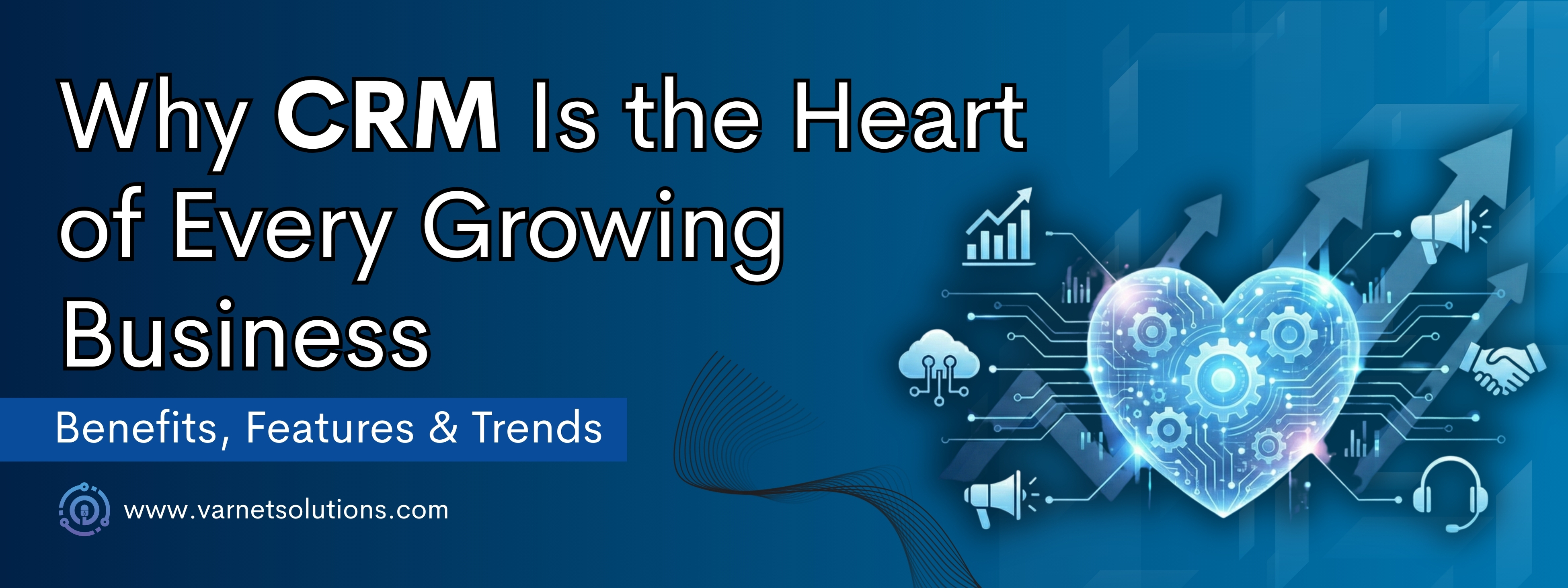
As we move deeper into the digital age, businesses face an evolving landscape where managing customer relationships has become more complex. The technological advances we’ve seen in recent years have drastically shifted how companies interact with customers. Customer expectations are growing rapidly, and businesses need to adapt or risk being left behind. CRM (Customer Relationship Management) systems are at the heart of this shift. But as we approach , CRM is no longer just about tracking customer data; it's about delivering highly personalized experiences and predicting customer needs before they even arise.

Key Trends Shaping CRM : An Intelligent, Integrated Future

The world of Customer Relationship Management (CRM) is rapidly transforming, moving towards highly intelligent, integrated, and proactive systems. several key technology trends will define how businesses manage and nurture their customer relationships, ultimately driving growth and customer loyalty.

1. AI-Driven CRM: Smarter Automation and Insights

Artificial Intelligence (AI) is the biggest game-changer, embedding intelligence across the CRM landscape:

  • Enhanced Sales Automation: AI automates repetitive tasks like lead generation, follow-ups, and data entry, freeing sales reps to focus on relationship building and closing deals, leading to faster conversions.
  • Predictive Lead Scoring: AI analyzes customer data to accurately assess which leads are most likely to convert, allowing sales teams to prioritize high-potential prospects.
  • Hyper-Personalization at Scale: AI analyzes preferences and behavior to deliver perfectly timed, tailored content and offers, significantly boosting customer engagement and conversion rates.
  • Sophisticated AI Chatbots: These provide instant, 24/7 customer support, instantly resolving issues and handling high volumes of inquiries without needing extra manpower.

2. The Rise of IoT-Integrated CRM: Real-Time Proactivity

The Internet of Things (IoT) is connecting physical devices to the CRM, enabling a new level of real-time insight and service:

  • Real-Time Customer Insights: Data from smart devices (like wearables or smart home tech) offers granular, real-time insights into customer behavior and needs, allowing for highly tailored communication.
  • Proactive Customer Service: CRM systems will move from reactive to proactive service. IoT devices can detect potential issues (e.g., a malfunctioning product part) and automatically alert the business, allowing them to reach out and resolve the problem before the customer even notices.
  • Improved Product Development: Real-time usage data from IoT helps businesses identify pain points and areas for improvement, fueling smarter, customer-driven product innovation.

3. Blockchain in CRM: Security and Transparency

As data security becomes paramount, blockchain technology offers a decentralized solution:

  • Secure Data Management: Blockchain enhances data security by decentralizing customer data storage, making it far more resistant to hacking than centralized databases.
  • Enhanced Transparency and Trust: Blockchain provides a secure, transparent, and unchangeable ledger to track customer interactions and transactions, building essential long-term trust and ensuring compliance with privacy regulations like GDPR.
  • Transparent Loyalty Programs: Blockchain's immutable ledger allows for loyalty programs where customers can clearly track how their rewards were earned, fostering greater trust and engagement.

4. Mobile-First CRM and Social CRM

Staying connected anytime, anywhere, and on any channel is non-negotiable:

  • Mobile-First Mandate: CRM systems must offer full functionality on smartphones and tablets, providing sales and service teams with access to real-time data and tools on the go to ensure continuous productivity and timely customer response.
  • Social CRM Integration: Integrating social platforms (Facebook, Instagram, LinkedIn) into the CRM allows businesses to monitor sentiment, respond to inquiries, and engage with customers directly on their preferred channels, ensuring a consistent brand experience.

✨ Conclusion: The Future is Intelligent and Personalized

The future of CRM is defined by a convergence of advanced technologies. By integrating AI for intelligent automation and personalization, IoT for proactive engagement, Blockchain for security and trust, and adopting a Mobile-First / Social approach for seamless connectivity, businesses can transform their operations, build stronger customer relationships, and gain a significant competitive edge.
Why Every Manufacturing Company Needs an AI-Integrated ERP System

  • 500 Views
  • Enterprise

In the fast-paced world of manufacturing, efficiency, accuracy, and agility are no longer optional — they’re essential. As manufacturers face challenges like fluctuating market demand, supply chain disruptions, and increasing competition, many are turning toward digital transformation. At the heart of this transformation lies one powerful solution: the AI-integrated ERP system.

The key reasons presented for adopting AI-powered ERP include:

    Predictive Maintenance:

    AI uses machine learning and IoT data to monitor equipment and predict potential breakdowns, dramatically reducing unplanned downtime and financial losses.

    Smarter Forecasting:

    AI analyzes historical data, market trends, and external factors for more accurate demand forecasting, leading to optimal inventory levels, reduced holding costs, and improved on-time delivery.

    Real-Time Quality Control:

    AI monitors production metrics instantly to detect anomalies and adjust processes on the fly, ensuring consistent product quality and minimizing waste.

    Streamlined Supply Chain Visibility:

    The systems provide end-to-end visibility and use predictive analytics to identify and suggest responses to potential disruptions (e.g., alternative suppliers).

    Enhanced Decision-Making:

    AI continuously analyzes vast amounts of manufacturing data to provide actionable insights on performance, waste, and labor allocation.

    Improved Workforce Productivity:

    AI automates repetitive administrative tasks and assists employees through integrated chatbots, allowing staff to focus on high-value activities.

    Customization and Continuous Improvement:

    Unlike static systems, AI-based ERPs continuously learn and adapt their algorithms over time, evolving with the business.

    Competitive Advantage:

    Manufacturers gain a clear edge through higher efficiency, better quality, faster response to market changes, and being future-ready in a digitizing world.

The Importance of Security and Privacy in Mobile App Development

  • 471 Views
  • Business

In today’s hyper-connected world, mobile apps have become an essential part of daily life — from banking and shopping to healthcare and communication. But as users share more personal information through apps, security and privacy have become more critical than ever.

Building a successful app isn’t just about great design or functionality — it’s about earning user trust through strong data protection and secure development practices.

1. Protecting User Data

Every app collects some level of personal data — names, emails, locations, or payment details. A single data breach can cause massive financial and reputational loss.

That’s why developers must use end-to-end encryption, secure APIs, and tokenization to safeguard sensitive information and prevent unauthorized access.

2. Compliance with Data Privacy Regulations

With global privacy laws like GDPR, CCPA, and India’s DPDP Act, mobile apps must ensure transparent data collection and consent mechanisms.

Following these standards not only avoids legal risks but also builds user confidence that their data is handled responsibly.

3. Preventing Cyber Threats

Hackers often target mobile apps through malware, phishing, or insecure code. Regular security audits, penetration testing, and updates help prevent vulnerabilities and keep apps resilient against evolving threats.

4. Building User Trust

Users are more likely to download and engage with apps that promise privacy and protection. Clear privacy policies, secure login systems, and transparent permissions demonstrate that your app values user safety.

Trust drives loyalty — and loyalty drives growth.

Final Thoughts

Security and privacy aren’t optional features — they’re the foundation of every successful mobile app.

Developers who prioritize secure coding, encryption, and compliance can deliver apps that users not only enjoy but truly trust.

If you’re planning to build a secure, high-performance mobile app, talk to our app development experts today to ensure your app stands strong against today’s digital threats.

AI for Manufacturing: Transforming the Future of Industrial Productivity

  • 101 Views
  • Artificial Intelligence

Artificial Intelligence (AI) is redefining how factories operate — making manufacturing smarter, faster, safer, and more efficient. From predictive maintenance and real-time quality inspection to autonomous robots and data-driven decision-making, AI enables manufacturers to reduce costs, minimize downtime, and boost production quality.

What Is AI in Manufacturing?

AI in manufacturing refers to the use of machine learning, computer vision, predictive analytics, and automation to optimize production processes, supply chains, and equipment performance.
It helps transform traditional factories into “smart factories” — systems that learn from data, self-optimize, and continuously improve without manual intervention.

Top AI Applications in Manufacturing

    1.Predictive Maintenance:

    AI models analyze machine sensor data to predict failures before they happen.

  1. 🔹Prevents unplanned downtime
  2. 🔹 Optimizes maintenance schedules
  3. 🔹 Extends machinery lifespan
  4. Example: Using vibration and temperature data from machines to predict bearing wear or motor failure.

    2. Quality Control & Defect Detection

    Computer vision systems powered by AI inspect products in real-time for cracks, color defects, or shape irregularities.

  5. 🔹 Improves consistency and reduces waste
  6. 🔹 Enables 100% inspection coverage
  7. 🔹 Outperforms human accuracy
  8. Example: AI cameras in automotive or semiconductor plants detecting micro defects invisible to the human eye.

    3. Process Optimization

    AI learns from thousands of production runs to identify optimal settings (temperature, pressure, speed) that improve throughput and quality.

  9. 🔹 Reduces energy use
  10. 🔹 Improves yield rates
  11. 🔹 Enables adaptive process control
  12. Example: Chemical manufacturing plants using AI to optimize catalyst efficiency and reaction parameters.

    4. Supply Chain & Demand Forecasting

    AI forecasts demand, detects supply risks, and optimizes inventory management.

  13. 🔹 Balances supply and demand
  14. 🔹 Reduces logistics costs
  15. 🔹 Prevents raw material shortages
  16. Example: FMCG and food processing units using AI for seasonal demand prediction.

    5. Robotics & Automation

    AI-driven robots (and cobots) perform repetitive or hazardous tasks efficiently.

  17. 🔹 Ensures worker safety
  18. 🔹 Reduces labor costs
  19. 🔹 Enables flexible, 24×7 production
  20. Example: Assembly line robots that learn new configurations through reinforcement learning.

    AI-Powered Tools and Technologies

    • Machine Learning (ML): Pattern recognition for predictive maintenance
    • Computer Vision: Automated inspection & defect detection
    • IoT + Edge AI: Real-time analytics from connected machines
    • Digital Twins: Virtual simulations for design and process control

    Industry Examples

    • Automotive – Predictive maintenance, autonomous assembly lines
    • Pharmaceuticals – Process optimization, batch quality prediction
    • Chemicals – Real-time process control, emission management
    • Textiles – Defect detection in fabrics, demand forecasting
    • Electronics – Component inspection, yield optimization
    • Food Processing – Quality control, spoilage detection, logistics optimization

    AI Adoption in Indian Manufacturing

    India’s “Make in India” and “Industry 4.0” initiatives are driving adoption of AI across:

    • Automotive hubs (Pune, Chennai, Gurugram)
    • Chemical clusters (Gujarat, Maharashtra)
    • Pharma zones (Hyderabad, Ahmedabad)
    • Electronics parks (Noida, Sriperumbudur, Bengaluru)

    Government-backed programs like the Digital India Initiative and National AI Mission are supporting R&D, data infrastructure, and upskilling in AI manufacturing.

    If you’re exploring ways to integrate AI into your manufacturing operations, our team would be happy to assist. Connect with our experts to discuss your challenges, goals, and the right AI implementation strategies tailored for your business.

How Much Does It Cost to Develop a Grocery Delivery App in 2025?

  • 205 Views
  • Enterprise

The grocery delivery industry is booming in 2025, fueled by consumer demand for convenience, faster delivery, and easy online shopping experiences. Apps like Blinkit and Zepto in India, and DoorDash, Walmart Grocery, FreshDirect, and Uber Eats in the United States, have proven that digital-first businesses can scale rapidly when backed by robust technology.

For entrepreneurs and enterprises, the key question is: How much does it cost to develop a grocery delivery app in 2025? Let’s break it down.

Factors That Influence Grocery Delivery App Development Cost

Several elements define how much you’ll spend on building your app:

    1. Features & Complexity

    • MVP (Minimum Viable Product): Sign-up, product catalog, cart, payments, and order tracking.
    • Advanced App: AI-based recommendations, predictive ordering, multi-vendor support, loyalty programs, and real-time analytics.

    2.Tech Stack

    • Cross-platform frameworks like Flutter or React Native are cost-effective.
    • Native apps for iOS and Android cost more but offer better performance.
    • Backend built with Node.js or Python ensures scalability and AI readiness.

    3. Design & User Experience

    • Simple UI/UX costs less.
    • Premium, custom, and animation-heavy designs add to development cost.

    4. Development Team Location

    • India & Southeast Asia: $20–$50/hour
    • Eastern Europe: $40–$80/hour
    • US/UK: $100–$200/hour

    5.Cloud Infrastructure & Integrations

    • Hosting, APIs (Google Maps, Payment Gateways, SMS), and push notifications all contribute to overall expenses

Estimated Grocery App Development Cost in 2025

Here’s a rough breakdown of development costs based on app type:

    App Type

    • MVP App
    • Mid-Level App
    • Enterprise-Level App

    Features

    • Basic sign-up, product display, cart, checkout, payments, order tracking.
    • Includes loyalty, push notifications, analytics, better UI, AI suggestions.
    • Multi-vendor support, AI predictions, advanced logistics, scalability for multiple cities.

    Estimated Cost Range (2025)

    • $15,000 – $30,000
    • $30,000 – $60,000
    • $70,000 – $150,000+

Hidden / Ongoing Costs to Consider

    • Cloud hosting & storage (AWS, GCP, Azure)
    • API & third-party service costs (maps, SMS, payments)
    • App maintenance & updates (15–20% of development cost annually)
    • Marketing & customer acquisition

How to Optimize Your Development Cost

    • Start with an MVP to validate your idea.
    • Use cross-platform frameworks for faster, cost-efficient builds.
    • Hire developers from cost-effective regions like India.
    • Leverage ready-made modules for payments, authentication, and notifications.

Final Thoughts

The cost to develop a grocery delivery app in 2025 depends on your business goals, feature set, and scalability plans. Whether you want to launch quickly with an MVP or build a full-fledged enterprise solution, the right development partner can help you achieve both quality and affordability.

👉 If you’re exploring grocery app development services and need clarity on features, tech stack, or launch strategy, schedule a call with our experts today. We’ll guide you with MVP launch features, cloud infrastructure, pricing models, and ongoing support.

📞 Let’s build your next-generation grocery delivery app together in 2025.

How Much Does It Cost to Develop an Education App in 2025 and How Varnet Can Help

  • 251 Views
  • Education

The global demand for education apps continues to rise in 2025, fueled by online learning, AI tutoring, and interactive educational tools. If you’re considering building an app for students, teachers, or corporate learners, you probably want to know: “How much does it cost to develop an education app in 2025?”

In this blog, we’ll break down the cost factors, key features, and explain how Varnet can help you build a cutting-edge education app.

Key Factors Affecting the Cost of Education App Development

The cost of an education app in 2025 depends on several crucial factors:

    1. App Complexity

    • Basic Education Apps:Simple apps with user registration, course listings, and quizzes – $5,000 to $25,000.
    • Intermediate Apps: Video streaming, interactive exercises, progress tracking, and payment integration – $25,000 to $80,000.
    • Advanced Education Apps: AI tutors, gamification, AR/VR features, live classrooms, and analytics dashboards – $80,000 to $250,000+.

    2. Platform Choice

    • iOS Only: Cheaper to develop.
    • Android & iOS: Costs increase but reach more users.
    • Cross-Platform (Flutter, React Native): Efficient and cost-effective for multiple platforms.

    3. Design & User Experience

    • Highly intuitive and engaging UI/UX increases development costs but improves user retention and learner satisfaction.

    4.Backend & Features

    • Apps with cloud storage, real-time chat, AI personalization, and video streaming require more development effort and investment.

    5. Maintenance & Updates

    • Ongoing updates, bug fixes, and adding new features are critical to ensure long-term app success.

Must-Have Features for a Modern Education App

To stand out in 2025, your education app should include:

    • Interactive Courses & Quizzes
    • AI-Powered Recommendations
    • Live Classes & Video Streaming
    • Gamification & Rewards
    • Progress Tracking & Analytics
    • Secure Payment Gateways
    • Push Notifications & Reminders

    These features enhance engagement and make your app a one-stop platform for learning.

How Varnet Can Help Build Your Education App

Varnet specializes in developing custom, feature-rich, and scalable education apps. Here’s how we make your app idea a reality:

    • Automotive – Predictive maintenance, autonomous assembly lines
    • Pharmaceuticals – Process optimization, batch quality prediction
    • Chemicals – Real-time process control, emission management
    • Textiles – Defect detection in fabrics, demand forecasting
    • Electronics – Component inspection, yield optimization
    • Food Processing – Quality control, spoilage detection, logistics optimization

AI Adoption in Indian Manufacturing

India’s “Make in India” and “Industry 4.0” initiatives are driving adoption of AI across:

    • Advanced Technology Integration: AI, AR/VR, and gamification for interactive learning.
    • Custom Solutions: Apps tailored to K-12, higher education, or corporate training.
    • Cross-Platform Development: Seamless experience on iOS, Android, and web.
    • Scalable Architecture: Handles growing users and content without performance issues.
    • User-Friendly Design: Intuitive UI/UX for learners of all ages.
    • Ongoing Support & Maintenance: Continuous updates to ensure smooth operation.

    Partnering with Varnet ensures your education app is not only functional but also engaging, scalable, and future-ready.

Conclusion

The cost to develop an education app in 2025 varies based on complexity, features, and platforms, ranging from $5,000 for a basic MVP to over $250,000 for advanced AI-powered apps.

By working with Varnet, you get a trusted development partner that delivers innovative,high-quality, and user-centric education apps. Whether it’s a simple learning platform or asophisticated AI-driven educational app, Varnet can bring your vision to life efficiently and effectively.

Revolutionizing Healthcare with Mobile Apps: On-Demand Services and Remote Monitoring

  • 141 Views
  • Enterprise

The healthcare industry is undergoing a digital transformation — and mobile apps are at the heart of it. With the rise of on-demand healthcare services and remote patient monitoring, mobile technology is making healthcare more accessible, personalized, and efficient than ever before.

From virtual doctor consultations to real-time health tracking, AI-driven healthcare apps are redefining how patients connect with care providers.

On-Demand Healthcare: Accessibility Anytime, Anywhere

Gone are the days when patients had to wait hours or travel long distances for medical consultations. On-demand healthcare apps now allow users to:

    • Book appointments instantly with certified doctors.
    • Order medicines online and get doorstep delivery.
    • Access telemedicine services for remote consultations.

These platforms make healthcare convenient and cost-effective, bridging the gap between patients and professionals while ensuring timely medical attention.

Remote Monitoring: The Power of Real-Time Data

With wearable technology and mobile integration, remote patient monitoring (RPM) has become a game changer. Patients can track vital signs such as heart rate, blood pressure, glucose levels, and sleep patterns — all through connected apps.

Doctors receive real-time data, enabling early diagnosis, preventive care, and personalized treatment plans. This not only improves patient outcomes but also reduces hospital readmissions and operational costs.

The Role of AI and IoT in Healthcare Apps

Modern healthcare apps leverage Artificial Intelligence (AI) and the Internet of Things (IoT) to analyze massive data sets and provide actionable insights. AI chatbots assist with symptom checks, while predictive analytics help identify potential health risks before they become critical.

This intelligent ecosystem promotes data-driven decision-making, empowering both patients and doctors to make smarter choices.

Benefits of Mobile Healthcare Apps

  • 24/7 access to medical care
  • Personalized health insights
  • Secure data storage and sharing
  • Reduced healthcare costs
  • Greater reach for medical professionals

These benefits make mobile apps essential tools in achieving accessible, affordable, and efficient healthcare for all.

Conclusion

The fusion of healthcare and technology is creating a world where medical care is just a tap away. From on-demand consultations to real-time monitoring, mobile apps are revolutionizing patient care and empowering people to take control of their health.

At Varnet Solutions, we specialize in developing innovative healthcare mobile apps that integrate AI, IoT, and cloud technology to deliver smarter, faster, and more reliable health solutions. Let’s build the future of healthcare together.