Why Businesses Must Shift from Manual KYC to Digital Verification in 2025 – Benefits, Compliance & ROI Explained
In the fast-evolving world of digital commerce, Know Your Customer (KYC) compliance has emerged as a vital element in any organisation's trust, security and regulatory foundation – not only for banks, fintechs and investment platforms but across any business that deals with sensitive customer data. However, old-school KYC processes are frequently slow, paper-based and open to human error.
This is where technology-driven e-KYC solutions are changing the game – bringing compliance into a faster, simpler and more stable experience. A notable one of these is Varnet’s KYC App (ProvisionPro) which automates the end-to-end KYC lifecycle including data capture, verification, reporting and audit readiness.
The Evolution of KYC Paper to Automation
For decades, financial institutions manually verified documents to onboard users. Physical signatures, photocopies of PAN or Aadhaar and checks in person were all routine.
Enter e-KYC (Electronic Know Your Customer) — a method that leverages technology to verify customer identity through the internet. Aadhaar-based authentication and real-time APIs have made e-KYC faster, accurate and regulatory compliant (SEBI, RBI, IRDAI).
But even digital KYC came with its own set of challenges:
- Independent verification, reporting, and documentation tools
- No coordination between KYC and sales platforms
- Complicated compliance monitoring with high chances of human error
What businesses needed was a centralized and automated KYC management system — and that is exactly what ProvisionPro delivers.
How Technological Simplicity Transforms the KYC Process
Our technology combines AI, automation, and secure cloud architecture to simplify every stage of customer onboarding.
Here’s how technology changes the process:
- Digital Data Collection – Customers upload or confirm identity documents such as PAN and Aadhaar through secure portals or mobile applications.
- Real-Time Verification – APIs integrate directly with government databases (KRA, UIDAI) for instant verification.
- Risk Profiling Automation – Intelligent rule engines classify customers into risk buckets to ensure regulatory compliance.
- E-Sign & Agreement Generation – Aadhaar-based eSign replaces physical signatures, speeding up agreement completion.
- Audit-Ready Logs – All actions including data entry and approvals are automatically recorded for compliance audits.
This approach significantly speeds up onboarding while reducing operational costs, human errors, and fraud risks.
What’s Wrong With Manual KYC in 2025?
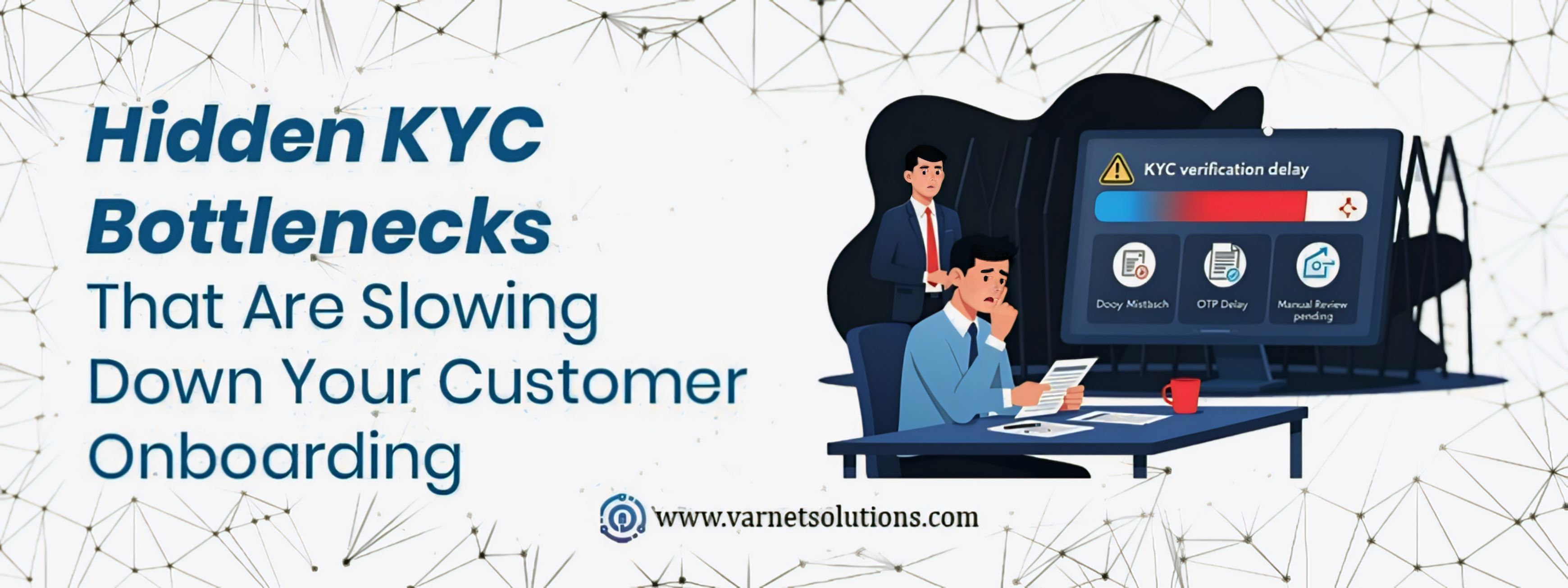
Manual KYC involves collecting customer documents physically or through email and verifying them via human reviewers. While this method worked earlier, it now has serious limitations in a fast-moving digital environment.
| Manual KYC Challenges | Business Impact |
|---|---|
| Long verification cycles | Delayed onboarding → Drop-offs |
| High operational staffing | Higher cost per customer |
| Error-prone human checks | Compliance failures |
| Fraud loopholes | Risk of regulatory penalties |
| No central data storage | Difficult auditing & reporting |
What Is the e-KYC Process of 2025?
Effective from 2025, e-KYC (Electronic Know Your Customer) has become the standard for digital onboarding across India and global financial systems.
The e-KYC process typically includes:
- Identity Verification: PAN, Aadhaar, or biometric verification
- KRA Fetch: Downloading KYC information from registered KYC agencies
- Eligibility Verification: Confirming investor eligibility based on financial data
- E-Signature Integration: Aadhaar-based digital signing for instant approvals
- PG Integration: Payment gateway integration for transaction-related KYC
Solutions such as ProvisionPro combine all these steps into a single streamlined process, ensuring regulatory compliance while delivering a seamless onboarding experience.
Actionable Benefits of KYC Automation
Organizations using advanced KYC automation tools like ProvisionPro achieve measurable business advantages:
- Quick Onboarding: Complete customer onboarding in minutes instead of days
- More Secure: End-to-end encrypted data protection
- Reduced Errors: AI-based validation minimizes human mistakes
- Smart Compliance: SEBI and RBI regulations are built directly into the workflow
ProvisionPro is pre-integrated with Varnet’s CRM and ERP solutions, enabling full automation from client acquisition to sales tracking.
Common Myths About Digital KYC — Busted
| Myth | Reality |
|---|---|
| Digital KYC is expensive | Subscription-based systems cost less than manual KYC teams |
| It’s complicated to integrate | Plug-and-play APIs make deployment easy |
| It works only for large enterprises | MSMEs and startups benefit even more |
| Customers won’t trust digital onboarding | Modern users expect fast, app-based onboarding |
Conclusion: Empower with Compliance by ProvisionPro from Varnet Solutions
In an era where customer engagement revolves around fast, accurate processes and trust is scarce, the automation of KYC isn’t just optimal—it’s essential.
The Varnet Solutions KYC App (ProvisionPro) goes beyond digitization by delivering a fully automated solution encompassing KYC, CRM, and ERP within a single framework.
With ProvisionPro, enterprises streamline onboarding while improving client confidence, regulatory trust and operational efficiency.
• Experience Seamless KYC Automation
Visit Varnet Solutions and discover how ProvisionPro can transform your compliance process almost overnight.
Q&A Section: The FAQs on KYC Automation You’ll Often Hear
Q1. What are the benefits of performing e-KYC for customers?
With e-KYC, customers can get verified in minutes without visiting offices or filling physical forms, making onboarding fast and hassle-free.
Q2. Is it legal in India to do automated KYC?
Yes. Platforms like ProvisionPro comply with SEBI, RBI, and UIDAI regulations that govern the digital KYC process.
Q3. Is e-KYC adaptable for different industries?
Absolutely. ProvisionPro is customizable for brokers, research analysts, NBFCs, fintech companies, and other entities to match workflow unique business models.
Q4. How is fraud reduced through KYC automation?
By validating data through government APIs and maintaining audit-ready logs, KYC automation minimizes risks related to document fraud and identity impersonation.
Step-by-Step: How ProvisionPro Automates KYC
- Customer triggers KYC on the website or app.
- PAN & DOB are verified instantly to report the customer on KRA.
- Suitability & Risk Profiling tests investment suitability.
- Auto-create agreement & eSign ensure digital compliance.
- Payment gateway integration closes the transaction loop.
- Audit report & logical mail are auto-generated for internal use.
- Each step is recorded, secured, and compliant—facilitating audits and ensuring transparency.